

Project Description


The fourth webinar showcased innovative public procurement in two CLIMABOROUGH cities.
BLOG#15: Procuring impactful climate solutions
CLIMAWEBINARS: Procuring impactful climate solutions
In this fourth webinar, international experts, city officials and service providers offered a deep dive into innovative public procurement and its real-life application in two European cities within the CLIMABOROUGH framework.
15th april 2025 CLIMAWEBINAIR intro slides
How can cities leverage innovation in public procurement to address climate change?
What happens when service providers and municipalities co-design solutions across the borders?
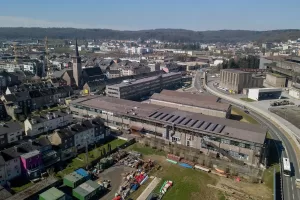
Aerial view of the former ArcelorMittal industrial site in differdange
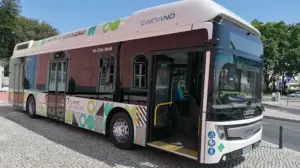
Cascais. MobiCascais – Free Buses
As part of the CLIMABOROUGH project, the fourth Climawebinar held on 15 April 2025 explored how cities can become proactive agents of change by rethinking their procurement strategies. Entitled “Procuring Impactful Climate Change Solutions”, the session brought together city officials, service providers, and international experts to share innovative approaches to public procurement that move beyond compliance and towards bold, climate-positive collaboration experiments.
During the event, participants delved into how reimagining procurement can unlock new opportunities for solution development, cross-border learning, and impactful partnerships. Real-world examples from Differdange and Cascais showcased how cities are already implementing these ideas, transforming procurement into a tool for climate action and long-term sustainability.
 >
> 
Public procurement: a catalyst for innovation, not just a compliance tool

Sports fields with synthetic grass in the city of Haarlem
> Find out more
Public procurement is often seen as a compliance-driven exercise, where cities purchase ready-made products and services, adapting themselves to what the market can already offer. However, when approached innovatively, procurement becomes a powerful lever to guide the market towards more sustainable, climate-aligned solutions.
The city of Haarlem decided to leverage this potential, using innovative procurement as a strategic enabler of sustainable innovation. By integrating circular economy principles into its tenders, it actively stimulates the market to provide cleaner and more climate-resilient solutions. An emblematic example is the city’s ‘future-proof sport pitches’ project, which replaced harmful materials from synthetic pitch floorings with bio-based alternatives and integrated solar panels and cooling systems into the new innovative configurations.
From purchasing to co-creating: a challenge-based model allows for cities and the market
Traditional procurement processes often limit cities to transactional relationships with suppliers, focusing on tested, market-ready solutions. In contrast, innovative procurement opens the door to experimentation and co-creation. Rather than buying a pre-defined product, cities can frame a challenge and invite the market to help develop tailored solutions.
The CLIMABOROUGH consortium implemented this concept through a multi-phase, federated procurement process. Cities did not specify what they wanted to buy—instead, they defined the problems they needed to solve. That approach fostered iterative dialogue and mutual learning: the search for solutions helped cities refine and better define their own challenges.
The process therefore encouraged 8 European cities to clarify their priorities and rethink how to address them more effectively, ultimately reinforcing the alignment between internal strategies and innovative market responses.
It also helped participants to revise their initial understanding of the tender goals and challenges, thanks to a specially designed negotiation process, which allowed them to revise their initial proposal concepts, prior to formal bidding.
Finally, with the award of two distinct proposals per city – based on the Most Economically Advantageous Tender principle – it has kept the door open to multiple outcomes, including buying additional copies of the successful solutions in case either, or both, should prove particularly effective by the end of the 1-year pilot experimentation.
Cross-border collaboration: navigating complexity while fostering experimentation and learning
Based on the current pilot status, most of the innovative solutions outlined above show significant potential, also to be transferred to other cities of Europe, through a transparent adoption or scaling mechanism. In practice, several factors hinder this shift, from the time and thematic misalignment of city priorities to the diversity of legal systems, cultures, and administrative frameworks. Such complexities also slow down or even block cross-border procurement initiatives. Although the tender instruments designed at the EU-level show the necessary flexibility, they are often underused because national boundaries are perceived as easier to navigate.
Nevertheless, as the CLIMABOROUGH federated procurement process demonstrates, cross-border collaboration can offer important opportunities for experimentation, innovation and mutual learning. Cities gain fresh perspectives and exposure to new ideas, while service providers can refine their solutions and expand their reach into new markets.
Redefining the city’s role in the market: towards a dynamic ecosystem of innovation and climate action
Ultimately, the challenge is not about technical limitations, but rethinking how cities position themselves in the market and how they engage with citizens and service providers. By moving beyond a purely transactional mindset, public procurement can become a proactive tool to steer markets towards more sustainable and socially valuable solutions.
This shift was powerfully expressed by the City of Differdange, who spoke about how it changes the role of the public servant from simply following procedures to becoming an agent of change and a bridge between citizens, companies, and innovative ideas. Citizen engagement is also crucial: informed and active citizens can help shape the demand side, pushing the market towards more sustainable and socially valuable solutions.
For service providers, this approach offers the chance to refine and test their innovations in real-world settings, making them more competitive and adaptable. In this way, innovative procurement becomes an opportunity to create a dynamic ecosystem—where climate strategies, market innovation, and social priorities intersect to drive systemic change and long-term climate neutrality.


