

Project Description

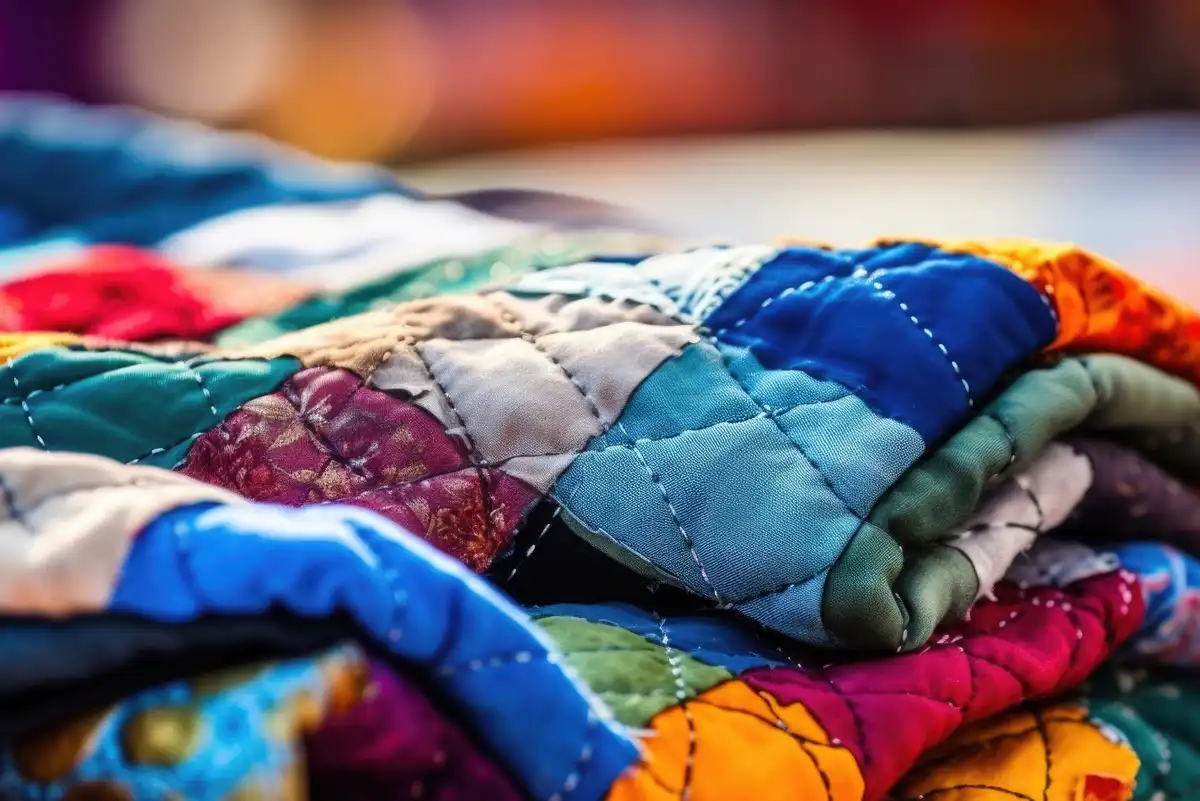
An image of patchwork made from fabric scraps, emblematic of upcycling – AI-generated.
Preventing textiles from becoming waste in Torino
Torino experimented solutions to reduce the textile waste and improve the recycling rates
Torino, one of the major cities in Italy, is one of the 100 Climate Neutral and Smart Cities in Europe and it is committed to becoming climate neutral by 2030.
European Environment Agency (EEA) logo
In 2020, textile consumption in the EU was responsible for approximately 270 kg of CO₂ emissions per person, according to the European Environment Agency.
Altogether, this amounted to 121 million tons of greenhouse gas emissions linked to textile use across the EU.
This is why, among the various initiatives launched to achieve this goal, the City chose, within the framework of the CLIMABOROUGH project, to implement an experimental action aimed at improving biowaste separation
Monitoring and raising awareness to improve waste collection
In the City of Torino, the quantity of unrecycled textile waste is still too high. On the one hand, this is caused by a lack of awareness and engagement of key stakeholders (citizens, businesses) in properly disposing of this kind of waste.
On the other hand, it is difficult to monitor the entire waste collection journey. To solve this severe issue, Torino and its delegated company needed to collect meaningful data useful to spot areas of intervention and define new and more efficient disposal strategies.
The solutions deployed worked to detect the lack of collection points, especially for small appliances, the knowledge gaps (uncertainties about proper disposal methods) and neighbourhood-centric solutions.

Consortia RiVestiTo logo

Consortia TracciaTO logo
Promoting the circular economy through AI and stakeholder engagement
The city partnered with two local consortia – RiVestiTo ( Atelier Riforma, Mercato Circolare, Huulke ) and TracciaTO ( Cooperativa Erica, Erion, ReLearn) – to promote a circular approach to textile management.
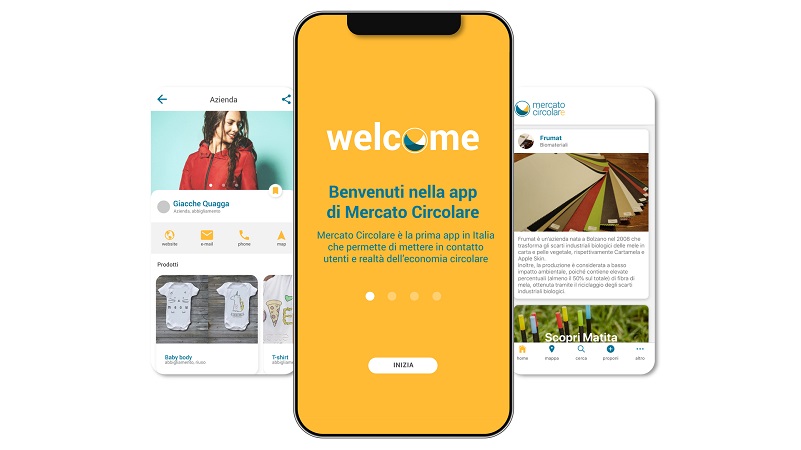
The Mercato Circolare app
RiVestiTo enhanced the transparency and efficiency of textile flows through two digital tools. Re4Circular, an AI-powered B2B marketplace, supports the classification and digitisation of used textiles and connects collectors with reuse, upcycling, and recycling actors. It was tested between April and September at five main collection sites with 470kg of post-consumer textile catalogued, while circular businesses in Turin and Piedmont were encouraged to source materials via the platform. At the same time, the Mercato Circolare app was expanded to help citizens identify local circular economy actors: more than 180 entities with circular businesses in the textile sector were mapped in the City of Turin, including 57 second-hand stores, 49 artisans and upcyclers, 24 tailoring workshops, 18 entities collecting textiles (2 with street bins and 16 with direct donations), and 38 other textile-related initiatives .
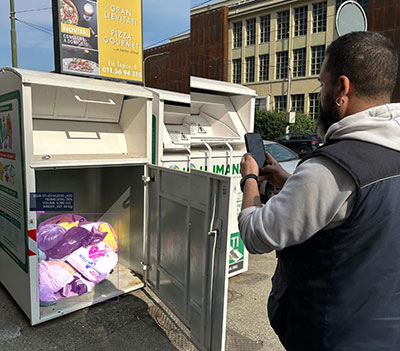
Collection of images and data through the NANDO.App
TracciaTO developed a socio-technological solution to monitor formal and informal textile waste flows and improve the collection of textiles and WEEE in the San Salvario district. Using AI and stakeholder engagement, the initiative generated reliable data on household and residual textile waste to reduce improper disposal.
The solutions were implemented through mapping of post-consumer textile actors, an online and offline citizens survey on their disposal habits (around 1200 responses collected by the RiVestiTo’s project within the City), waste composition analysis of mixed waste to quantify the amount of target waste, and interviews with key textile management organisations to ensure integration with existing systems.
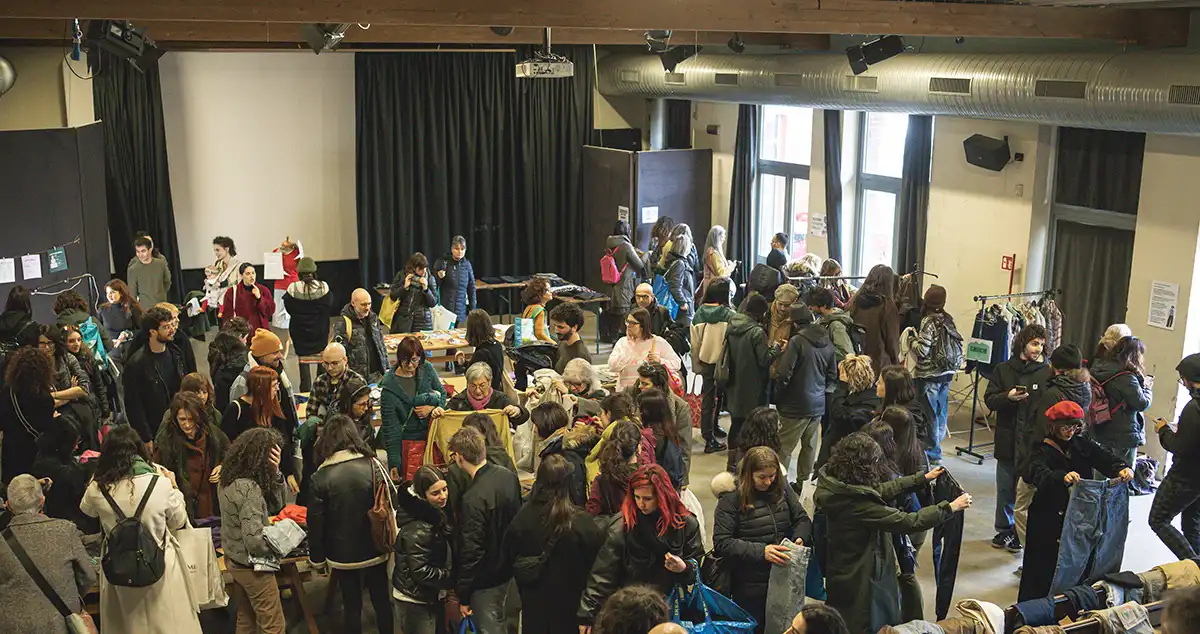
One of the City Days organized by RiVestiTo
Public engagement played a central role, with multiple events that involved around 3400 citizens. Six City Days (under the format of RiVestiTo Live) were organized in different neighbourhoods of the City, each dedicated to a specific theme: swapping, caring for garments, repairing, second-hand clothing, donations, and finally creativity and upcycling. These events saw the participation of more than 600 citizens. A photo exhibition “Reverse – Sguardi su una moda sostenibile” curated by the photographer Chiara Agostinetto was also taken around to these events. To raise awareness, a pocket guide named “Cosa ne faccio?” was also created and 1000 copies distributed. The guide aims to provide practical advice on what to do with textile (both clothing and household textiles) that are no longer used, differentiating the solutions depending on whether the textile is still in good condition or not and whether you have time available to dedicate or not. Designed in collaboration with the sustainable fashion advocate Sara Zampollo, the podcast «Guarda (quanta) roba!» has been released with 3 episodes and many topics covered. You can listen to it here: > Listen to the playlist on YouTube In the second part of the project, an experimental corridor to promote textile reuse before materials become waste was launched with 17 participating entities and a great deal of enthusiasm from the citizens. In conclusion, we can say that the experimentation raised awareness among strategic actors, including the Città Metropolitana, and identified additional circular economy stakeholders.
The project also highlighted challenges, notably citizen resistance to new collection bins due to perceived impacts on property values, generating complaints and media attention. These insights informed a shared, long-term vision for waste management, with potential replication across other material streams, such as plastic. Overall, the figures indicate strong citizen participation and a clear willingness to collaborate. However, clearer communication to end users is needed to further increase the share of correctly sorted waste and improve collection flows.

What happens next?
Thanks to success of the project, the City of Turin, in partnership with the urban agglomeration decided to keep active the innovative practice to promote textile reuse before materials become waste.
Moreover, the City is creating collection points based on the mapping exercise and challenge design, with five new textile bins to be installed. Some challenges have arisen due to resident complaints, but results will be available soon.
Learning from this experince the City of Turin has launched a new call for proposals dedicated to the circular economy. Applications are now officially open for the public notice “Culture and Entrepreneurship rooted in the circular economy and the urban fabric,” which makes over €1.8 million in non-repayable grants available to SMEs and third sector organizations that intend to develop circular innovation projects. The call for proposals is part of the PN METRO Plus and Città Medie Sud 2021-2027 National Program, the instrument through which the Italian government and the European Union support the country’s main urban areas in implementing strategic interventions aimed at ecological, digital, and social transition. In particular, the call for proposals falls under Axis 2 – Ecological Transition of Cities, which promotes urban models capable of reducing the environmental footprint, supporting the circular economy, improving resource management, and strengthening the resilience of local communities, while developing ecosystems of territorial innovation and encouraging the active participation of citizens, businesses, and the third sector.


