

Article on Annual Forum session on circularity and textiles
The Cascais’ innovative textile system at the Energy Cities Annual Forum
The solutions tested by the Portuguese pilot city within CLIMABOROUGH inspired other European cities to replicate them in their local contexts.
The ENERGY CITIES logo
How can cities tackle the growing environmental impact of textile consumption while convincing citizens to adopt more circular behaviours? This question was at the heart of the Spotlight session: tackling indirect emissions organised within the Energy Cities Annual Forum, the inspiring and networking event bringing together local and regional authorities and climate and energy actors across the continent, which this year took place in Guimarães (Portugal) on 28–30 April.
In particular, the session was a great opportunity for CLIMABOROUGH to share the work carried out by the Municipality of Cascais (Portugal) within the project. Indeed, the discussion highlighted how cities can redesign local textile systems to promote sufficiency, reuse, and circularity while strengthening both policy frameworks and operational tools.
Addressing the growing textile challenge
Textile consumption and waste are rapidly increasing across Europe, generating significant environmental impacts and contributing to rising greenhouse gas emissions. Against this backdrop, the session explored the role cities can play in accelerating systemic change and implementing innovative local solutions.
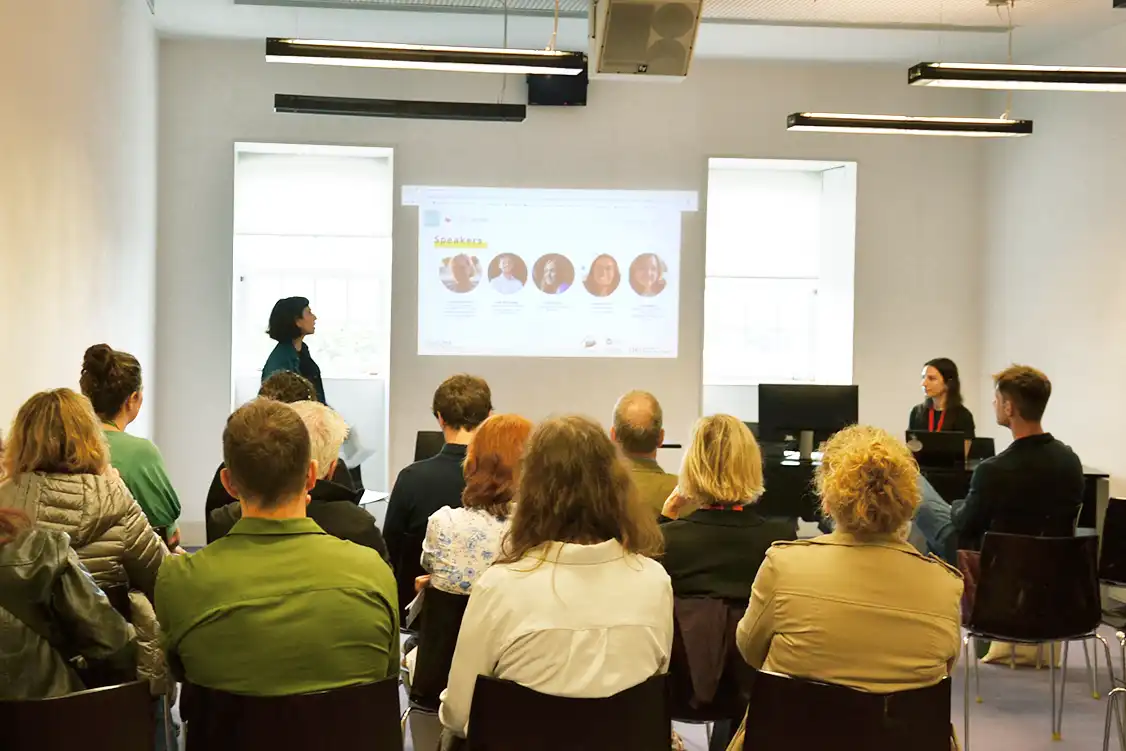
Participants at the Spotlight session on circularity and textiles, Energy Cities Annual Forum, Guimarães, 30 April 2026

Jack McQuibban
Head of Local Zero Waste Implementation – Zero Waste Europe
The discussion featured contributions from leading organisations working on circular economy and waste prevention policies. Jack McQuiban from Zero Waste Europe stressed the importance of tackling consumption-based emissions and prioritising prevention and sufficiency approaches rather than focusing solely on waste management downstream.

Françoise Bonnet
Secretary General – Association of Cities and Regions for Sustainable Resource Management (ACR+)
Françoise Bonnet from ACR+ presented the evolving European regulatory framework for textiles, including the introduction of mandatory separate textile collection and Extended Producer Responsibility (EPR) schemes. She highlighted that many municipalities are still not fully aware of the opportunities and obligations arising from new EU legislation, which can limit their capacity to design effective local circular economy strategies.
In this context, exchanges between cities and experts are becoming increasingly important to bridge the gap between European policy frameworks and local implementation.
Cascais’ smart textile collection system
The second part of the discussion focused on practical city experiences and highlighted Cascais alongside Santo Tirso (Portugal) and London (UK) as frontrunner cities developing innovative approaches to textile systems transformation.

Barbara Coelho
Project manager, Cascais Ambiente
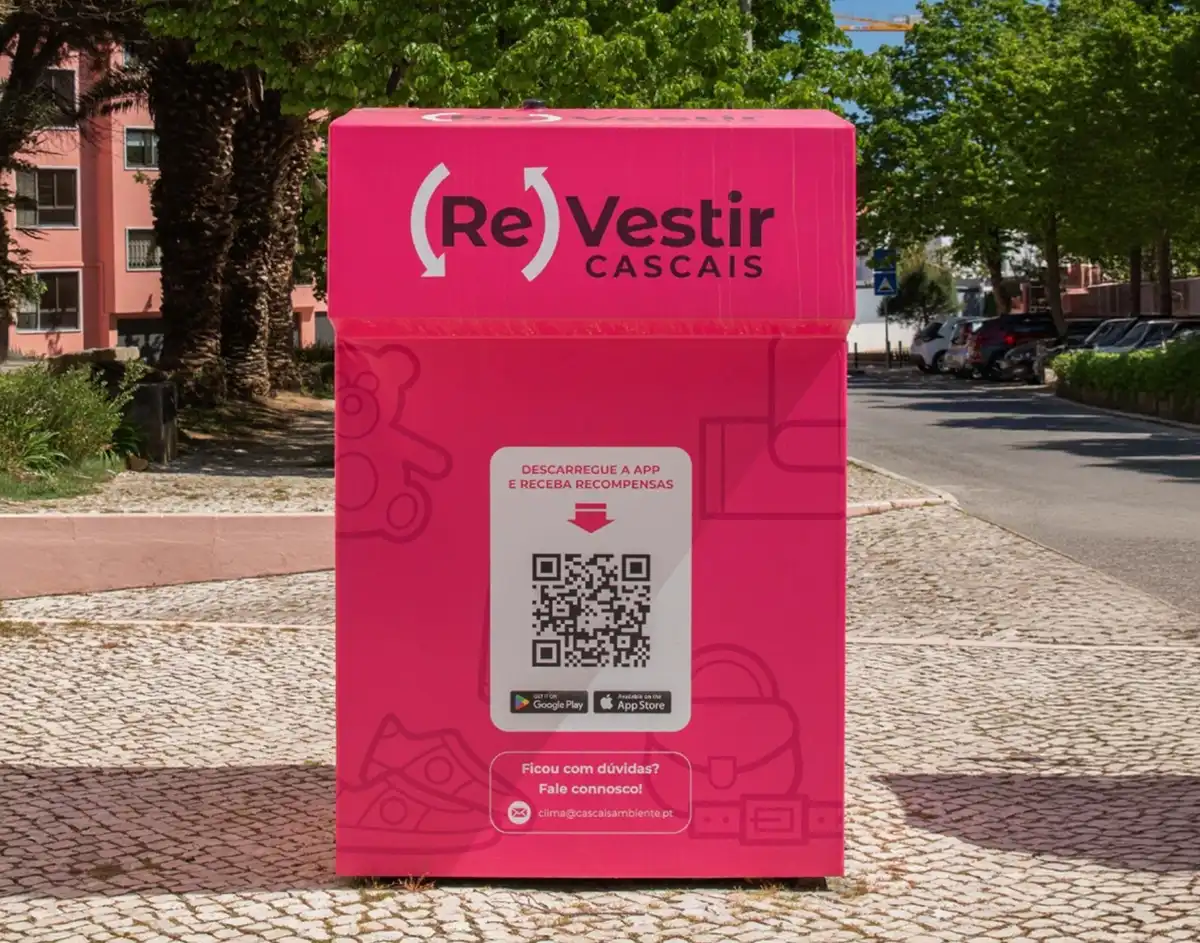
Within CLIMABOROUGH, Cascais has developed (Re)Vestir), an innovative digital textile return system aimed at improving textile collection rates while encouraging behavioural change among citizens. The system tested combines QR-enabled tracking infrastructure with gamified engagement tools designed to incentivise participation and promote more sustainable consumption habits.

Vera Araújo
Head of Division INVEST Santo Tirso – Municipality of Santo Tirso, Portugale
Through this pilot, Cascais has demonstrated how digital tools and citizen-centred approaches can help municipalities move beyond traditional waste collection models and build smarter, more circular urban systems. The initiative also contributes to generating valuable data on textile flows and citizen participation, supporting more evidence-based local policymaking.

Racher Singer
Circular Economy Advisor – ReLondon
Alongside Cascais, Santo Tirso showcased its efforts to reinvent a traditional textile-producing local economy through circular innovation, while ReLondon – a partnership of the Mayor of London and London’s boroughs to improve waste and resource management in the capital and accelerate decarbonisation – shared its experience in shifting consumption patterns and enabling new circular business models at metropolitan scale.
Cities need practical and replicable solutions to advance their local transition
The panel discussion was followed by an interactive world café involving around 35 participants from across Europe, including representatives from cities such as Heidelberg (Germany), Iași (Romania), and Lisbon (Portugal). Participants engaged directly with the three case studies and discussed the opportunities and challenges linked to replicating similar approaches in their own local contexts.
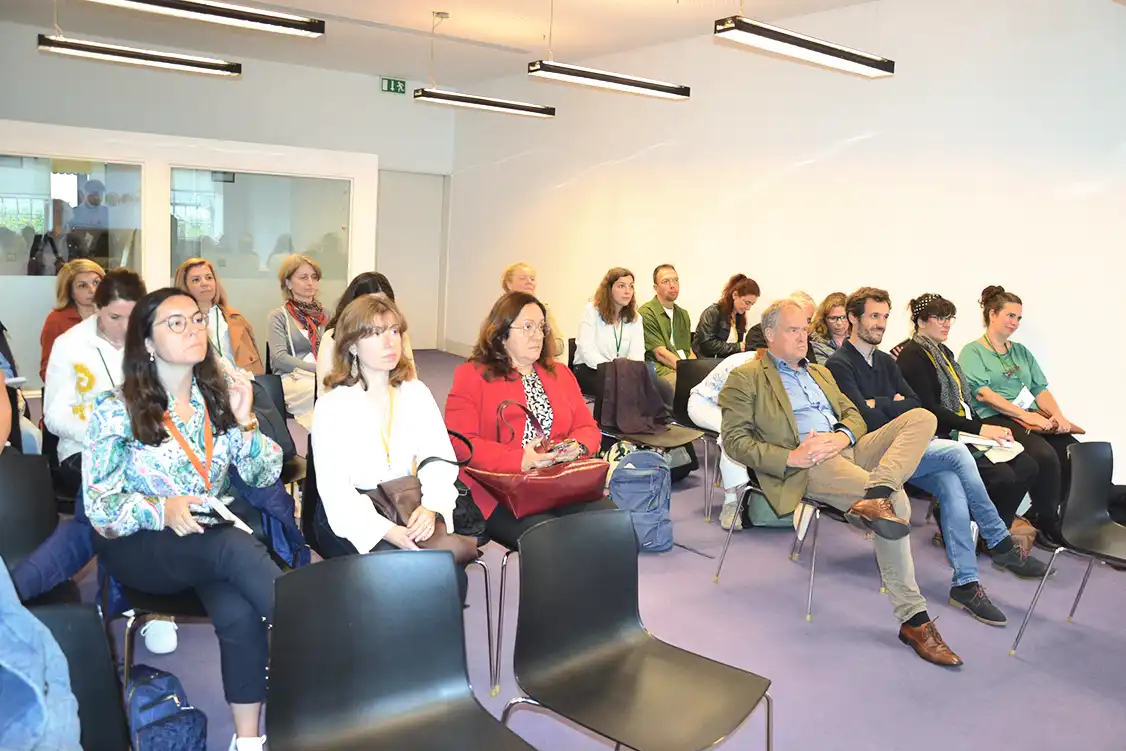
Participants at the Energy Cities Annual Forum, Guimarães, 30 April 2026
Cascais attracted particularly strong interest, with several cities and organisations interested in learning more about the smart textile collection approach with a view to potentially replicating it in their local context. The discussions also highlighted potential future collaboration opportunities with cities such as London and Santo Tirso, both recognised as important actors in the field of circular economy and textile innovation.
Overall, the event demonstrated the growing demand among European cities for practical, scalable solutions capable of addressing the environmental and social impacts of textile consumption. It also reinforced the importance of peer learning and replication activities in accelerating the transition towards more circular and climate-neutral urban systems across Europe.
Curious to learn more about the smart solution tested in Cascais? Click HERE for more information!


